Marrakech Unlocked: The Insider’s Secret to the Red City
Marrakech in 2026 is a breathtaking paradox, a place where the ancient dust of the Sahara meets the high-speed fiber optics of a modernizing kingdom. As you step out of the Menara Airport, the air hits you first, a complex bouquet of sun-baked terracotta, blooming jasmine, and the faint, savory charcoal smoke from a thousand evening grills. The light here is legendary; artists have chased this specific “Ochre Hour” for centuries, where the sun dips low and turns the city’s rose-pink walls into a glowing, fiery crimson.
The soundscape is equally intoxicating. Beneath the melodic, synchronized call to prayer that echoes from a hundred minarets, there is the mechanical hum of electric motorbikes weaving through the street, the rhythmic “clink-clink” of traditional water sellers’ brass cups, and the melodic bartering in Darija (Moroccan Arabic) that serves as the city’s heartbeat. To the uninitiated, it is a sensory explosion that can feel overwhelming. The labyrinthine streets don’t come with a manual, and the sheer density of history can make a traveler feel like they are drowning in culture rather than swimming in it. In this digital age, anyone can click “book” on a riad, but finding the hidden courtyards where the real soul of the city resides requires a more curated approach. To truly unlock Marrakech, you need more than a generic map; you need the perspective of a digital advisor who understands the nuances of 2026 Morocco, a guide that bridges the gap between the legendary past and the sophisticated present.
Navigating the Medina: Beyond the Maps
The Medina of Marrakech is a living, breathing organism comprising over 10,000 winding alleys, many of which are no wider than a donkey’s cart. In 2026, while satellite technology has improved, GPS still famously “hallucinates” once you step under the cedar-wood overhangs of the souks. The tall stone walls bounce signals, often placing your blue dot three streets away from your actual location. To explore with true confidence, you must learn to read the city’s architectural language.
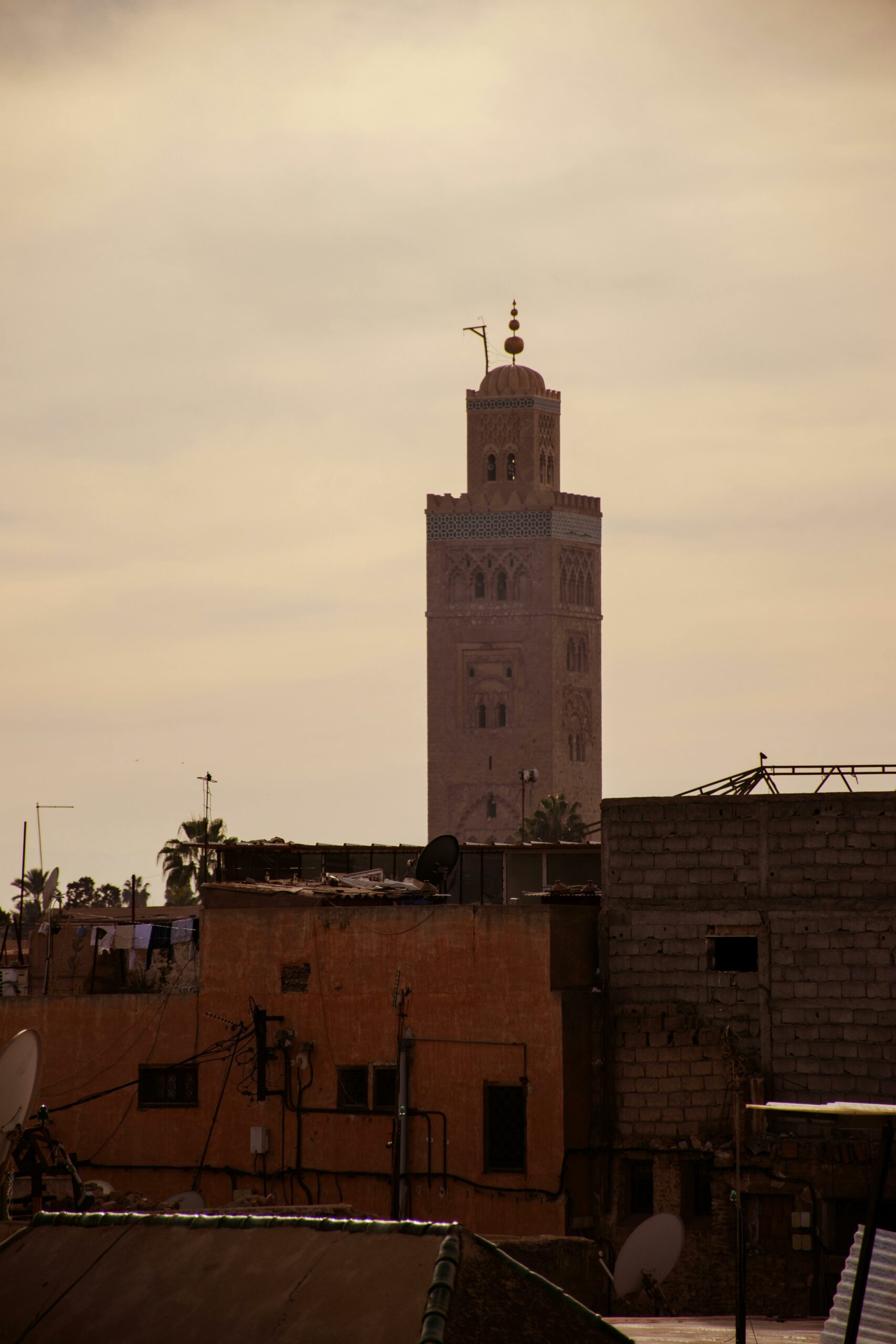
The most vital tool in your mental kit is the Koutoubia Compass. The 12th-century minaret of the Koutoubia Mosque is the city’s “North Star.” Because no building in the Medina is permitted to be taller than a palm tree (or the minaret itself), you can almost always find a gap in the rooftops to spot its silhouette. If you are lost, find the Koutoubia; it will lead you straight back to Jemaa el-Fnaa, the central nervous system of the city. Furthermore, understand the “Street Width” Rule. Wide, paved paths are the Medina’s arteries; they lead to the Bab (gates), the main markets, and public transport. If an alley begins to narrow significantly or terminates in a dead end (Derb), you are likely entering a residential cluster.
For the modern traveler, the Moroccan government has installed Heritage Circuits—color-coded wall plaques that act as physical breadcrumbs through history. Following the “Green Circuit” might lead you to the secret gardens of the Mouassine, while the “Rose Circuit” focuses on the craftsmanship of the dyers and tanners. However, the best navigation tool remains human interaction. If you find yourself truly turned around, do not ask a group of wandering youths, who may expect a tip for leading you (often via the “scenic” route). Instead, step into a fixed boutique or a spice shop. These shopkeepers are the guardians of their neighborhoods; they provide honest, static directions because they cannot leave their post. This ensures you get to your destination via the most direct path.
A Culinary Journey: Tasting the Soul of Morocco
Moroccan cuisine is a slow-motion art form, a philosophy of patience that is often lost in the “quick-serve” restaurants catering to the masses. To eat like a local in 2026, you must understand the concept of terroir. The best food isn’t found on menus printed in five languages; it is found in the communal ovens and the specialized stalls of the Souk Ablouh.
The undisputed king of Marrakech is the Tanjia Marrakshia. Often confused with the Tagine, the Tanjia is a bachelor’s dish, historically prepared by the workers of the souk. It consists of cuts of lamb or beef, garlic, saffron, cumin, and smen (aged fermented butter), all sealed inside a clay urn. This urn is not cooked over a flame but buried in the hot ashes of the Fernatchi (the furnace that heats the local hammam). The result is a meat so tender it collapses at the touch of a fork. Another staple you cannot ignore is Harira. While often associated with the breaking of the fast during Ramadan, in Marrakech, it is a daily ritual. This velvet-textured soup, rich with tomatoes, chickpeas, lentils, and a squeeze of fresh lemon, is the ultimate comfort food. For a decadent experience, seek out Chicken Bastilla. This is Morocco’s answer to the savory pie, a delicate layer of warqa pastry dusted with cinnamon and powdered sugar, hiding a heart of saffron-spiced chicken and crushed almonds.
When choosing where to eat, follow the smoke and the crowd. In 2026, the trendy rooftops of the Medina offer great views, but the most authentic flavors remain at ground level. Look for stalls where locals are lined up with their own bread; this is a sign of high turnover and fresh ingredients. The “Advisor Rule” for dining is simple: if the menu has pictures of the food, keep walking. The best establishments usually only cook two or three things, and they do them perfectly.
Pro-Tip: Head to the Habbous area or the deep Medina around 11:00 AM to see the Tanjias being delivered to the shops. For the best Harira, look for small shops near the mosques just after the evening prayer; it’s often served with sweet chebakia cookies for a perfect salty-sweet balance.
The Perfect 10-Day Strategy: A Rhythmic Itinerary
The most common mistake travelers make in Morocco is treating it like a checklist. Marrakech is a city of “being,” not just “doing.” Our 2026 advisor strategy focuses on a high-low rhythm, alternating the intense sensory input of the city with the profound silence of the surrounding landscapes.
-
Days 1–3: The Deep Dive.
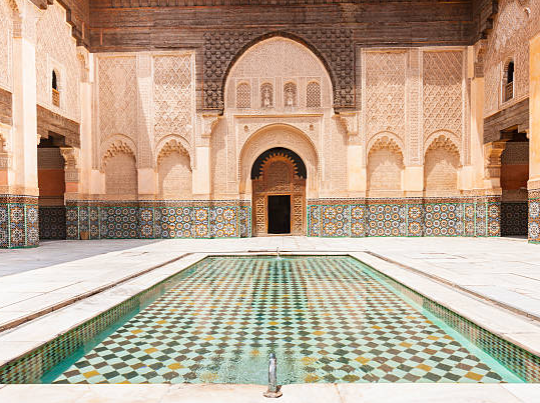
Spend your first 72 hours surrendering to the Medina. Visit the Ben Youssef Madrasa to see the pinnacle of Islamic architecture, then lose yourself in the Le Jardin Secret. Spend your evenings at Jemaa el-Fnaa, but don’t just walk through it—sit on a balcony with a mint tea and watch the “Greatest Show on Earth” unfold as the storytellers and musicians take their places.
-
Days 4–6: The Great Escape.
By day four, the noise of the souks will have reached a crescendo. This is the time to head to the Atlas Mountains or the Agafay Desert. Agafay is a “stone desert,” offering a lunar landscape just 45 minutes from the city. Here, you can experience luxury glamping, starlit dinners, and a silence so profound it feels physical. Alternatively, the village of Imlil provides a gateway to Toubkal, North Africa’s highest peak, offering crisp air and Berber hospitality.
-
Days 7–10: The Atlantic Breeze.
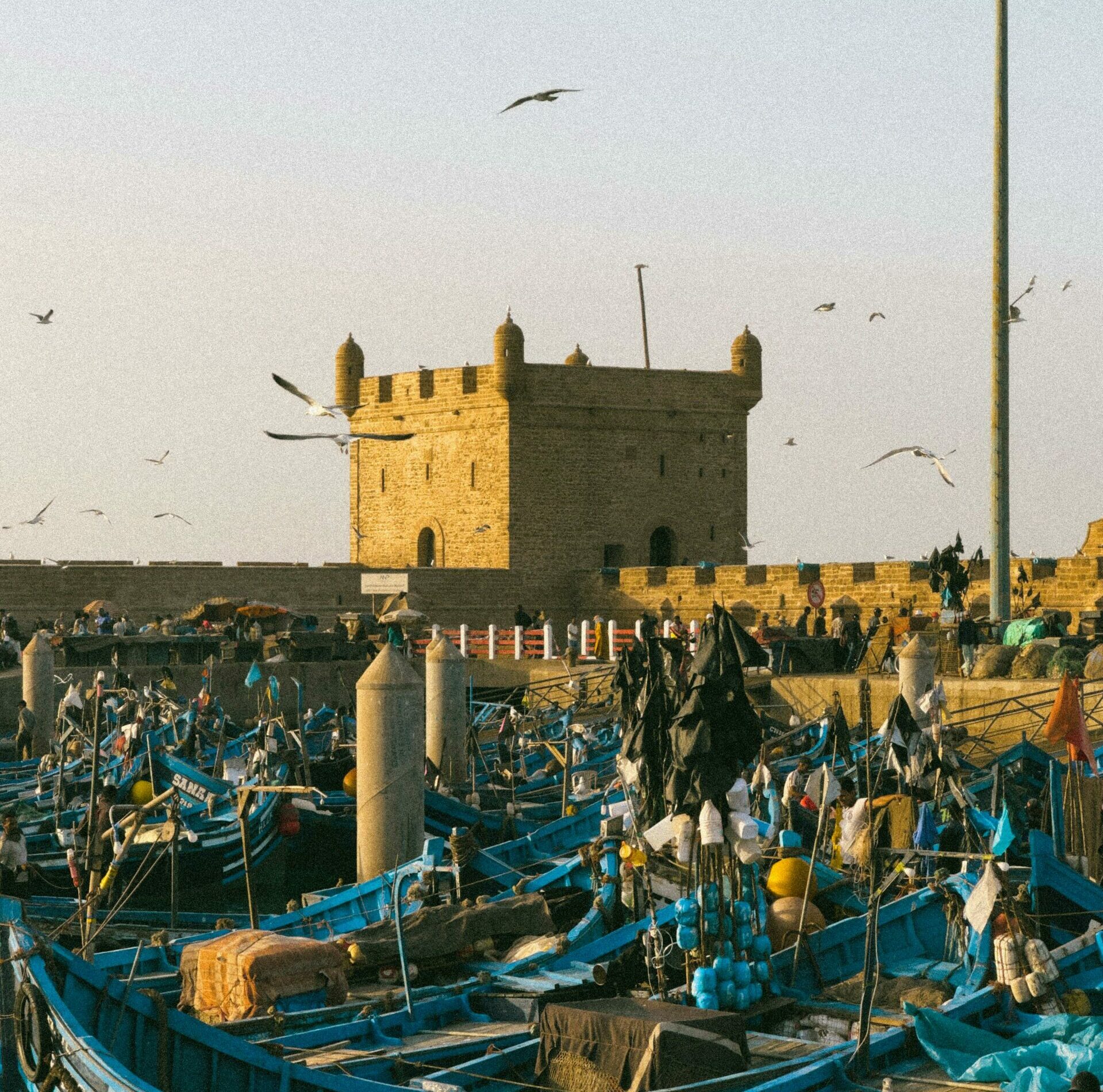
No trip to the Red City is complete without contrasting it with the Blue City of Essaouira. A three-hour drive brings you to this coastal fortress. The pace here is glacial compared to Marrakech. Spend your final days eating grilled sardines straight from the boat, walking the windy ramparts made famous by Game of Thrones, and reflecting on your journey. Return to Marrakech for one final night in a high-end Riad in the Gueliz district to see the modern, chic side of the city before flying out.
Pro-Tip: Always book your Riad for the first and last nights in the same place. It allows you to leave a “base bag” with souvenirs or heavy items while you travel to the mountains or the coast, keeping your mid-trip travel light and stress-free.
Don't just visit Morocco—live it.
From private fossil workshops in Erfoud to sunset camel treks in Merzouga, see how we’ve curated the ultimate 10-day loop from Marrakech
Budgeting for Reality (2026 Prices)
In 2026, Marrakech remains an accessible destination, but the “hidden” costs can add up if you aren’t prepared. Transparency is the hallmark of a good advisor, and the reality of the local economy is that it is shifting toward a hybrid of cash and digital payments. However, for the average traveler, the rule remains: Cash is King.
For a mid-range traveler, a daily budget of $40 to $70 (400–700 MAD) is the sweet spot. This allows for one “sit-down” meal at a nice restaurant, several street food snacks, entrance fees to two monuments, and local transport. If you are staying in a luxury Riad, your overhead will be higher, but your daily spending stays surprisingly low because of the value of the Moroccan Dirham. When it comes to the souks, remember that price tags are rare. Negotiating is not just a way to save money; it is a social contract. A good advisor knows that the “first price” given is often triple the “fair price.” Aim to meet in the middle, and always do so with a smile.
Tipping, or backsheesh, is an integral part of the economy. In 2026, carry a stack of 10 and 20 Dirham notes. These are essential for tipping waiters (10% is standard), luggage porters, and the “guardians” who watch over parked cars. While high-end boutiques in Gueliz and upscale Riads will accept international credit cards (Visa and Mastercard are preferred over Amex), the heart of the city—the markets and small cafes—operates entirely on cash.
Etiquette & The Modern City: Being a Gracious Guest
Marrakech is a city that bridges the gap between medieval tradition and Gen-Z modernism. As an advisor, the goal is to help you move through these spaces with “Cultural Intelligence.” The residents of Marrakech are incredibly hospitable, but they value respect and privacy highly.
One of the biggest friction points is photography. In an era of Instagram and TikTok, it is tempting to film everything. However, many locals view a camera as an intrusion. Always ask “Afak?” (Please?) or “Momkin?” (Is it okay?) before taking a photo of a person or their specific shop display. If they say no, respect it without question. In the same vein, dressing modestly is a sign of respect. While Marrakech is more liberal than rural Morocco, especially in the “New City” of Gueliz, the Medina is a conservative space. Shoulders and knees should generally be covered for both men and women. This simple gesture often results in better service and a more welcoming attitude from locals.
Furthermore, understand the etiquette of the Hammam. This is not a spa; it is a ritual. If you visit a local public hammam, follow the lead of others regarding modesty. In private “Spa Hammams,” the rules are more relaxed, but the core remains the same: it is a place of cleansing and quiet. Finally, respect the religion. Non-Muslims are generally not permitted to enter mosques in Morocco (with the exception of the Hassan II Mosque in Casablanca). Do not try to peak through the doors during prayer times; instead, appreciate the intricate tile work and calligraphy from the outside.
Pro-Tip: Learn three words in Derja: Salam Alaikoom (Peace be upon you/Hello), Shukran (Thank you), and La, Shukran (No, thank you). Using “La, Shukran” with a polite nod is the most effective way to decline unwanted offers from street vendors without being rude.
Marrakech in 2026 is a city that demands more than just your presence; it demands your participation. It is a place that rewards the well-prepared traveler with layers of beauty that remain invisible to those rushing through a checklist. By shifting your perspective from a “tourist” to an “informed guest,” you transform the potential chaos of the Medina into a captivating dance of history and hospitality. Whether you are sipping mint tea on a rooftop as the sun sets over the Atlas Mountains, or finding the perfect hand-woven rug in a sun-dappled alleyway, the Red City offers a profound sense of connection to a world that feels both ancient and vibrantly alive.
The secret to a successful journey lies in your willingness to let go of total control while staying anchored by the “Digital Advisor” principles we’ve shared. Embrace the sensory explosion, respect the local traditions, and don’t be afraid to get a little lost, sometimes the best stories are found in the alleys you didn’t mean to turn down. From the hidden architectural gems of the 12th century to the chic, sustainable galleries of the modern era, Marrakech is ready to reveal its soul to you. All that’s left is for you to take that first, confident step into the labyrinth.
Is Marrakech safe for solo travelers in 2026?
Marrakech is a remarkably secure destination for solo explorers, backed by a dedicated branch of the Brigade Touristique that ensures the city remains hospitable for international guests. While violent crime is rare, safety for a solo traveler is primarily about navigating social interactions and avoiding petty scams. Expert advisors recommend staying on well-lit, busy thoroughfares after dark and using reputable, pre-booked transport for airport transfers to ensure a stress-free arrival. By projecting confidence and maintaining a general awareness of your surroundings, you can explore both the ancient Medina and the modern neighborhoods with total peace of mind. The city is a vibrant tapestry that rewards those who move through it with a blend of curiosity and common sense.
Can I drink the tap water in Marrakech?
To ensure your trip remains comfortable and uninterrupted, we strongly recommend sticking to bottled or filtered water throughout your stay. Although the municipal water in 2026 is treated, the mineral content and bacterial flora differ significantly from what many Western travelers are accustomed to, which can often lead to digestive upsets. Using bottled water for drinking and even brushing your teeth is a simple precaution that keeps you feeling your best. For an eco-friendly alternative, consider a reusable bottle with a high-quality built-in filter, which allows you to stay hydrated while reducing plastic waste. Additionally, be cautious with ice in street drinks and always opt for fresh-squeezed juices from high-turnover stalls to guarantee quality.
When is the best time to visit the Red City?
For the most enjoyable experience, plan your journey during the shoulder seasons of Spring (March–May) and Autumn (September–November). During these windows, the weather is nearly perfect—warm enough for rooftop lounging but mild enough for hours of exploring the labyrinthine souks. In contrast, mid-summer (July and August) can be punishing, with Saharan heat frequently reaching 45°C, making the stone-walled Medina feel like an oven during the day. Winter offers beautiful, clear skies and fewer tourists, but be aware that while days are sunny, nights can be quite cold. Choosing the right season ensures you can fully embrace the outdoor culture, from the mountain vistas to the lively evening atmosphere of Jemaa el-Fnaa.
How do I handle unsolicited help in the streets?
In the bustling Medina, it is common for locals to offer directions or lead you to “secret” attractions. The most effective way to handle this unwanted attention is with a polite but firm “La, Shukran” (No, thank you), delivered with a confident pace and a pleasant nod. This cultural signal shows you are a well-prepared traveler who knows their destination.