
Lost Caravan Legends of the Merzouga Desert
The golden dunes surrounding Merzouga are among the most mesmerizing landscapes in Morocco. Every year, thousands of travelers journey to this small desert village on the edge of the Sahara to experience camel trekking, breathtaking sunsets over the dunes, and unforgettable nights beneath a sky filled with stars. For many visitors exploring Morocco, travel experts and local Morocco advisers often recommend Merzouga as one of the most extraordinary destinations in the country.
But long before modern tourism reached the Sahara, these dunes were not simply a destination for adventure seekers. They were part of one of the most important trade networks in the ancient world. For centuries, camel caravans crossed the Sahara Desert carrying goods, culture, and stories between North Africa and the powerful kingdoms of West Africa.
Some caravans completed their journeys successfully and became part of legendary trade routes that shaped the history of Morocco and the wider region. Others, according to local folklore and desert stories, vanished into the shifting sands—lost forever among the endless dunes.
Today, travelers riding camels across the golden dunes of Erg Chebbi unknowingly follow the same paths once walked by ancient merchants and nomadic guides. For those seeking travel advice about exploring the Sahara in Morocco, visiting Merzouga offers a rare opportunity to experience both the beauty of the desert and the fascinating legends that still echo through its sands.
The Sahara Desert: An Ancient Highway of Trade
To many modern visitors, the Sahara appears empty and isolated. Yet for more than a thousand years, it functioned as a vast economic highway connecting North Africa with the powerful kingdoms of West Africa. Several historic cities in Morocco, including Marrakesh and Fez, became important centers of trade thanks to these ancient trans-Saharan caravan routes. Cities like Timbuktu, famous for its wealth and scholarship, also became key centers of commerce and learning along these trade networks. Goods moved north toward cities such as Marrakesh and Fez, where they were exchanged and transported to Mediterranean markets.
The most valuable commodities transported across the desert included:
- Gold from West African kingdoms
- Salt from Saharan mines
- Spices and textiles
- Ivory and rare goods
- Dates and other desert products
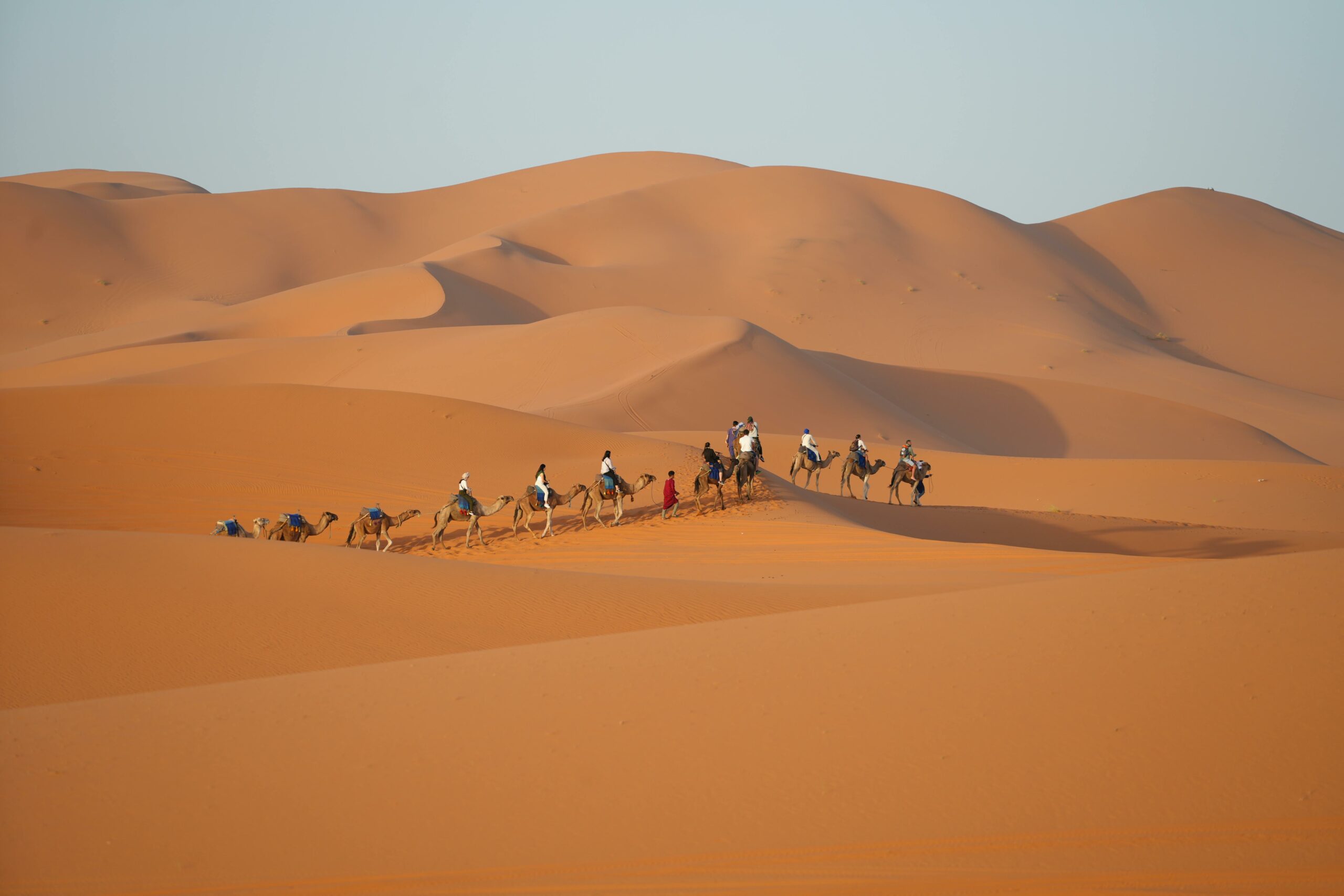
These items were transported by enormous camel caravans, sometimes consisting of hundreds or even thousands of camels traveling together across the desert. Such journeys required careful planning, courage, and an intimate understanding of the Sahara.
The Camel: Ship of the Desert
None of these ancient journeys would have been possible without camels. Perfectly adapted to desert life, camels have long been known as the “ships of the desert.”
Their unique biological adaptations allow them to survive extreme desert conditions that would be impossible for most other animals.
Camels can:
- Travel long distances without water
- Carry heavy loads across sand and rocky terrain
- Withstand extreme temperature changes
- Navigate difficult landscapes
For ancient traders, camels were more than just transport animals—they were essential partners for survival. Even today, camel trekking remains the most authentic way to explore the desert landscape around Merzouga.
For travelers visiting the Sahara in Morocco, local guides often share practical advice about desert travel, explaining how camels were once essential for survival in this harsh but beautiful environment.
The Majestic Dunes of Erg Chebbi
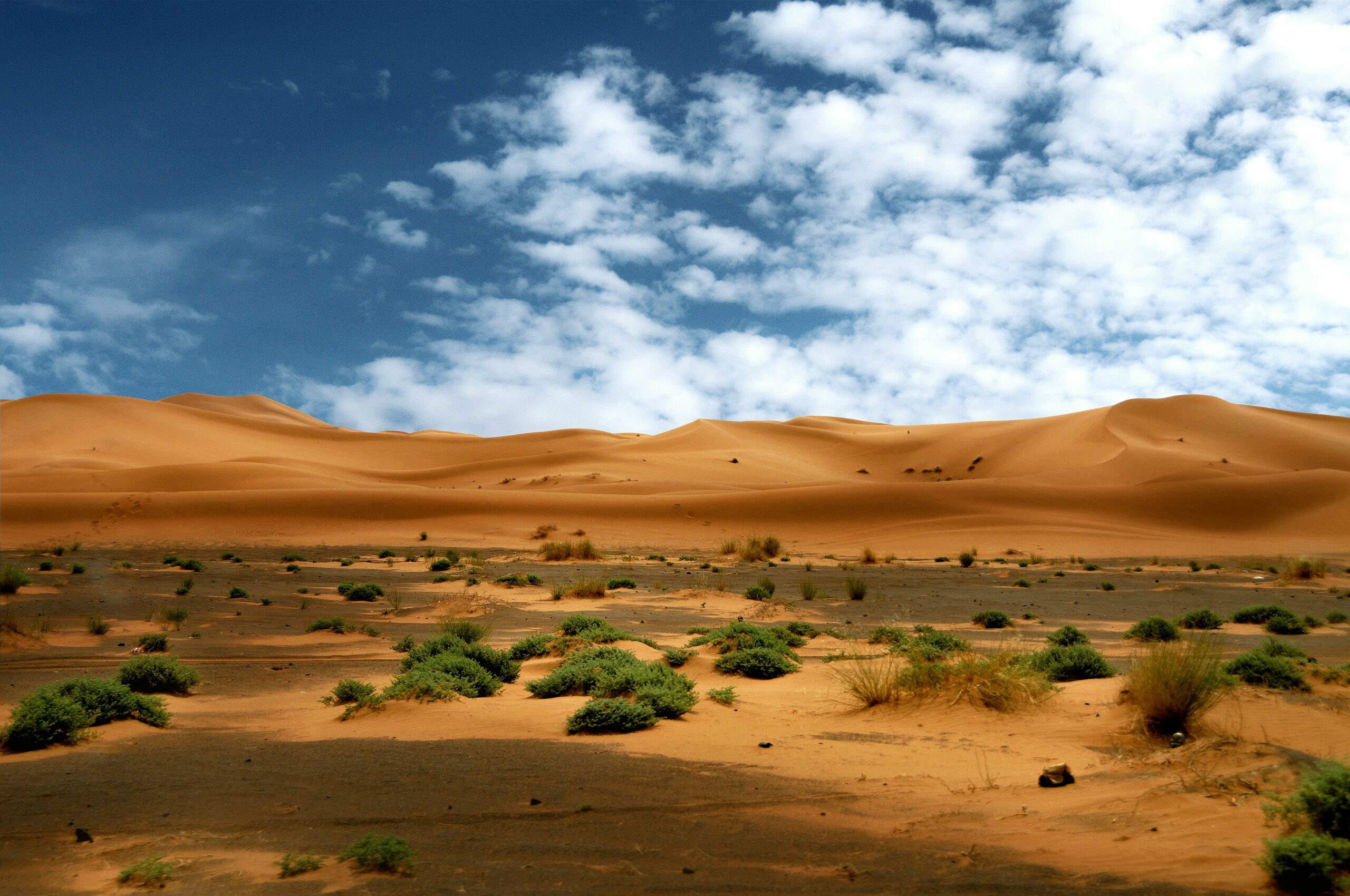
The dunes of Erg Chebbi are among the most iconic desert landscapes in Morocco. Rising up to 150 meters high, these golden dunes stretch for nearly 30 kilometers along the Algerian border.
For modern visitors, they represent beauty and adventure. But for ancient caravans, they could also represent danger.
Unlike rocky desert terrain, sand dunes are constantly reshaped by the wind. Tracks left behind by caravans could disappear within hours, leaving travelers with little indication of the path they had taken.
Desert guides relied on:
- Knowledge of the stars
- Wind patterns and sand formations
- Landmarks such as mountains or dry riverbeds
- Experience passed down through generations
Without these skills, navigating the dunes could quickly become disorienting.
Today, the dunes of Erg Chebbi remain one of the most famous natural attractions in Morocco, and many travel advisers recommend Merzouga as one of the best places to experience the Sahara Desert.
The Challenges of Crossing the Sahara
Travel across the Sahara has always been a dangerous undertaking. Ancient caravans faced numerous challenges that could turn a carefully planned journey into a disaster.
-
Sandstorms
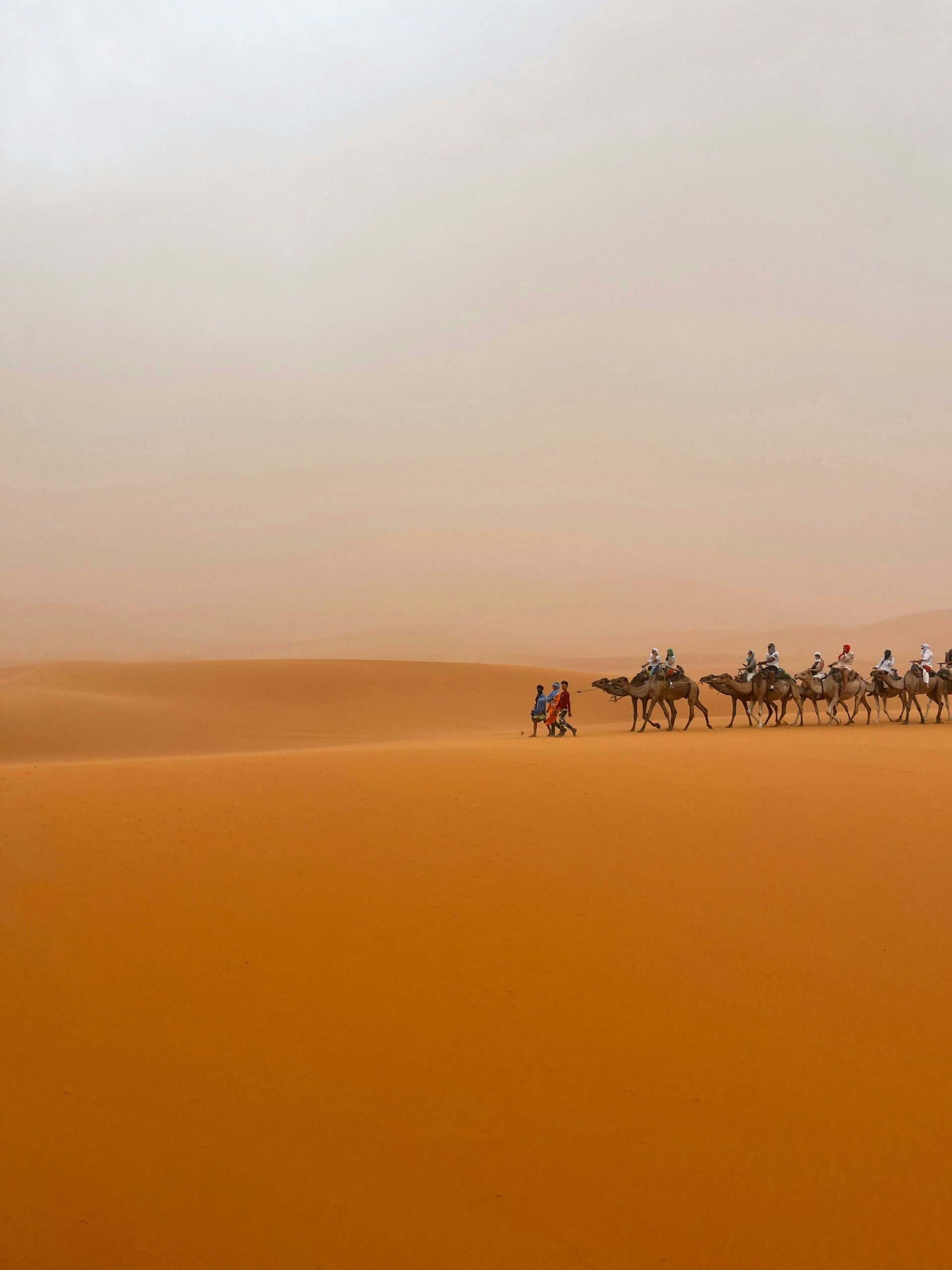
Sandstorms were among the most feared dangers. Strong desert winds could suddenly sweep across the dunes, filling the air with sand and drastically reducing visibility. During such storms, travelers had to stop and wait until conditions improved. If a caravan became separated during a storm, it could easily lose its direction.
-
Water Shortages
Water was the most valuable resource in the desert. Caravans planned their routes carefully around wells and oases. However, if a well dried up or a caravan miscalculated its supplies, dehydration could become a deadly problem.
-
Heat and Cold
The Sahara is known for its extreme temperatures. Daytime heat can be intense, while nights can become surprisingly cold. Travelers had to adapt to these drastic changes while maintaining enough energy to continue their long journeys.
-
Navigation Mistakes
Without modern navigation tools, guides relied entirely on their experience and natural observations. A small mistake in direction could lead a caravan far from its intended route. Because of the vastness of the Sahara, getting lost could have serious consequences.
Even today, experienced desert guides in Morocco often give visitors important advice about preparing for the desert environment, including staying hydrated, protecting against the sun, and respecting the power of the Sahara.
The Legends of Lost Caravans
Over time, haunting stories began to circulate about massive caravans that vanished into the heart of the Sahara, never to be seen again. In the close-knit communities surrounding Merzouga, these accounts evolved into a rich tapestry of local folklore, whispered by campfires and passed down through countless generations. While some legends describe entire expeditions being entombed alive beneath the shifting dunes during cataclysmic sandstorms, others focus on the mysterious disappearance of wealthy traders. These tales suggest that the desert itself acts as a silent guardian, swallowing those who carry the most precious cargos of gold, ivory, and gems, leaving behind nothing but a lingering sense of mystery in the wind.
Among these many tales, one popular legend stands out: the story of a majestic caravan laden with West African gold that attempted to navigate the treacherous peaks of Erg Chebbi centuries ago. According to the lore, a sudden and violent sandstorm of unprecedented scale swept across the horizon, erasing the sky and reshaping the very earth beneath the travelers’ feet. When the winds finally settled and the dust cleared, the entire caravan—hundreds of camels and their keepers—had vanished without leaving so much as a single footprint. To this day, many locals believe that the immense treasures of this lost expedition remain perfectly preserved deep beneath the golden sands, waiting for a shift in the dunes to reveal their ancient glitter once more.
Night in the Sahara: When Stories Come Alive
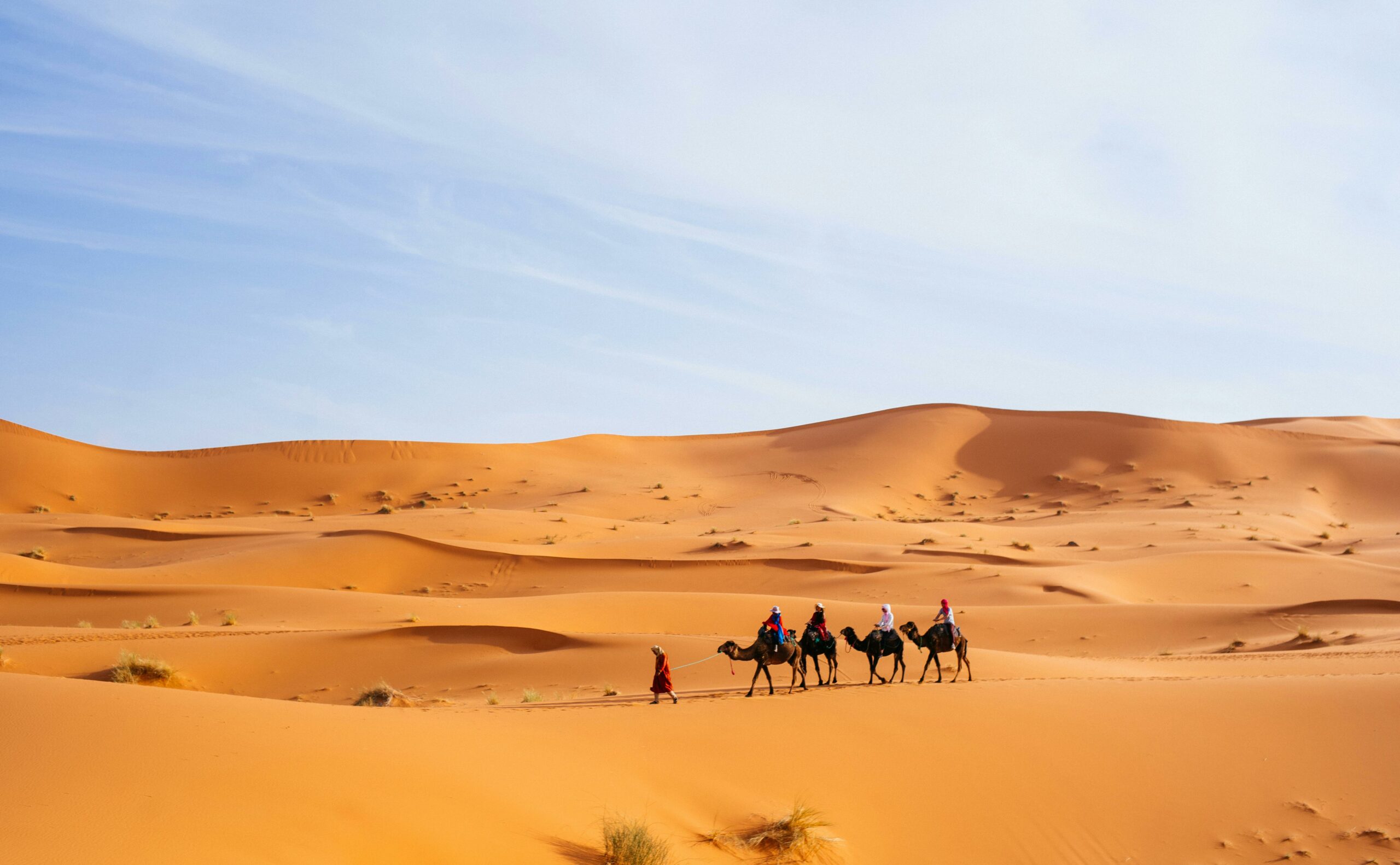
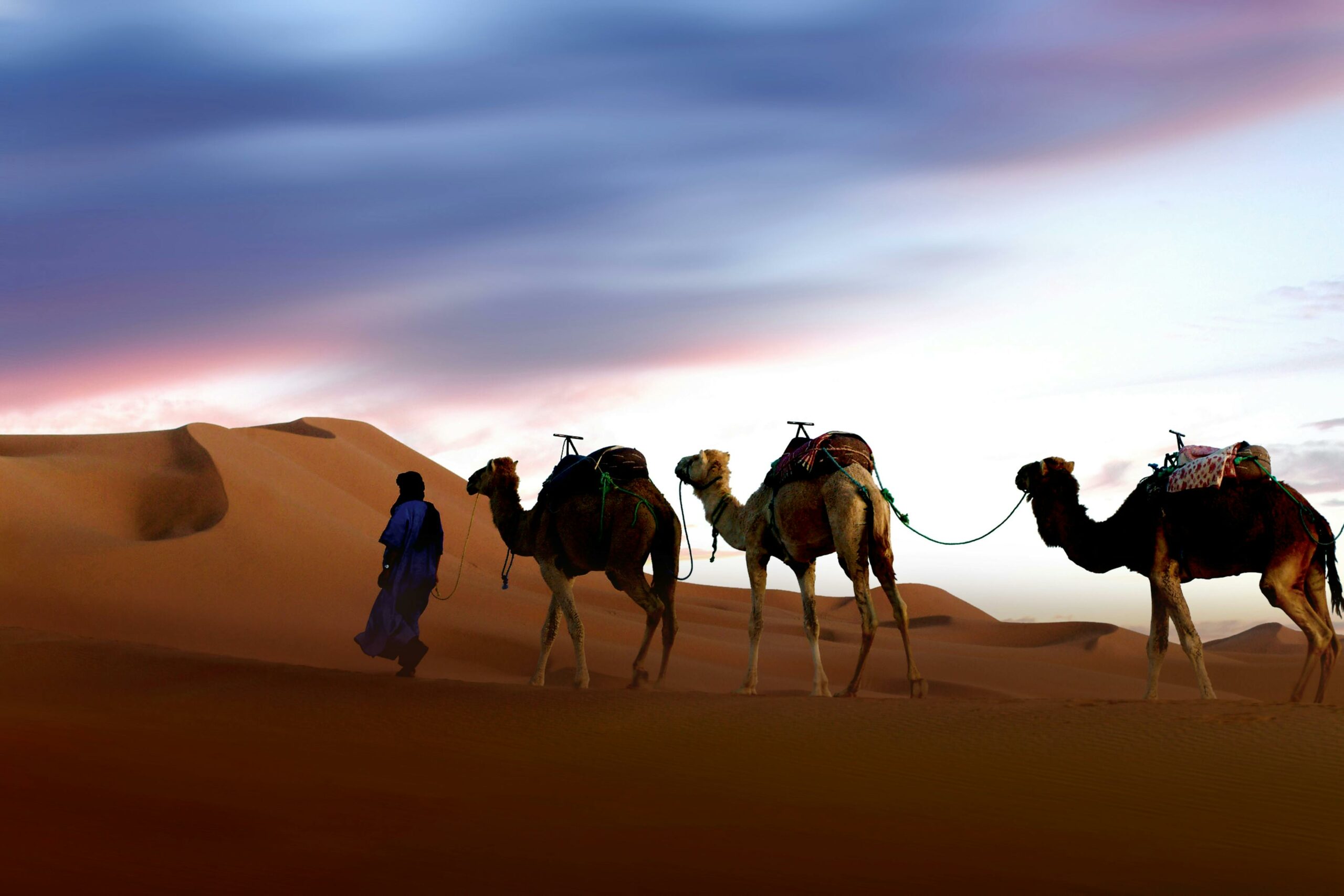
One of the most magical experiences in Merzouga is spending a night in the deep desert after a long, rhythmic camel trek across the undulating golden sands. As the sun begins its slow descent behind the towering, sculpted peaks of Erg Chebbi, the sky transforms into a breathtaking, ever-changing canvas of fiery orange, deep crimson, and soft, bruised purple hues. With the final disappearance of the sun beneath the horizon, the intense, radiating heat of the day rapidly gives way to a crisp, refreshing coolness that invigorates the senses. A profound, almost heavy silence settles over the landscape—a stillness so absolute that it feels entirely removed from the frantic noise of the modern world. In this quietude, travelers are granted a rare opportunity to truly connect with the raw, untouched beauty of the Saharan wilderness, feeling the ancient pulse of the earth beneath them.
As a velvet darkness falls over the dunes, the desert camp transforms into a flickering sanctuary of warmth and culture where history truly comes alive through the oral traditions of the desert people. Visitors naturally gather around the crackling central campfire, drawn to the dancing flames to listen to local guides—often descendants of nomads—share haunting legends of lost caravans and ancestral stories of survival and spirits. This immersive experience is heightened by the hypnotic, rhythmic pulse of traditional Berber drums that seems to echo the heartbeat of the desert itself, accompanied by the comforting steam and sweet aroma of fresh Moroccan mint tea. High above, far from the reach of any artificial light, the sky ignites with a spectacular, crowded canopy of thousands of stars and the crystalline arch of the Milky Way. This celestial display is so vivid and vast that it humbles the soul, creating a spiritual moment of clarity that many travelers describe as the most unforgettable experience of their entire lives.
Many travel advisors who specialize in trips to Morocco say that spending a night in a Sahara desert camp is one of the most unforgettable experiences the country has to offer.
Following the Ancient Caravan Paths in Merzouga Today
Although the massive, gold-laden trade caravans no longer trek across the horizon, their enduring spirit is preserved within the modern desert experiences of Merzouga. Camel trekking today offers visitors a profound glimpse into the sensory world of the ancient travelers, allowing them to step back into a time when the desert was the ultimate frontier. Riding slowly across the shifting crests of the dunes, travelers are granted a unique perspective on the sheer vastness and raw beauty of the Saharan landscape. The gentle, hypnotic rhythm of the camel’s stride, combined with the vast, quiet surroundings, creates a deep sense of meditative calm that is almost impossible to find in the frantic pace of modern life.
While today’s treks are significantly shorter and far more comfortable than the grueling, months-long journeys of the past, they still forge a meaningful and visceral connection to the Sahara’s history. Modern guides, many of whom carry the lineage of the nomadic tribes, act as living bridges to this heritage by sharing ancestral knowledge about resilient desert flora, elusive wildlife, and survival traditions passed down through oral history. As the sun casts long shadows over the sand, travelers realize they are treading on the very same paths once navigated by the “ships of the desert” centuries ago. This experience ensures that the legacy of the caravans is not just a story found in books, but a living, breathing part of the Merzouga sands.
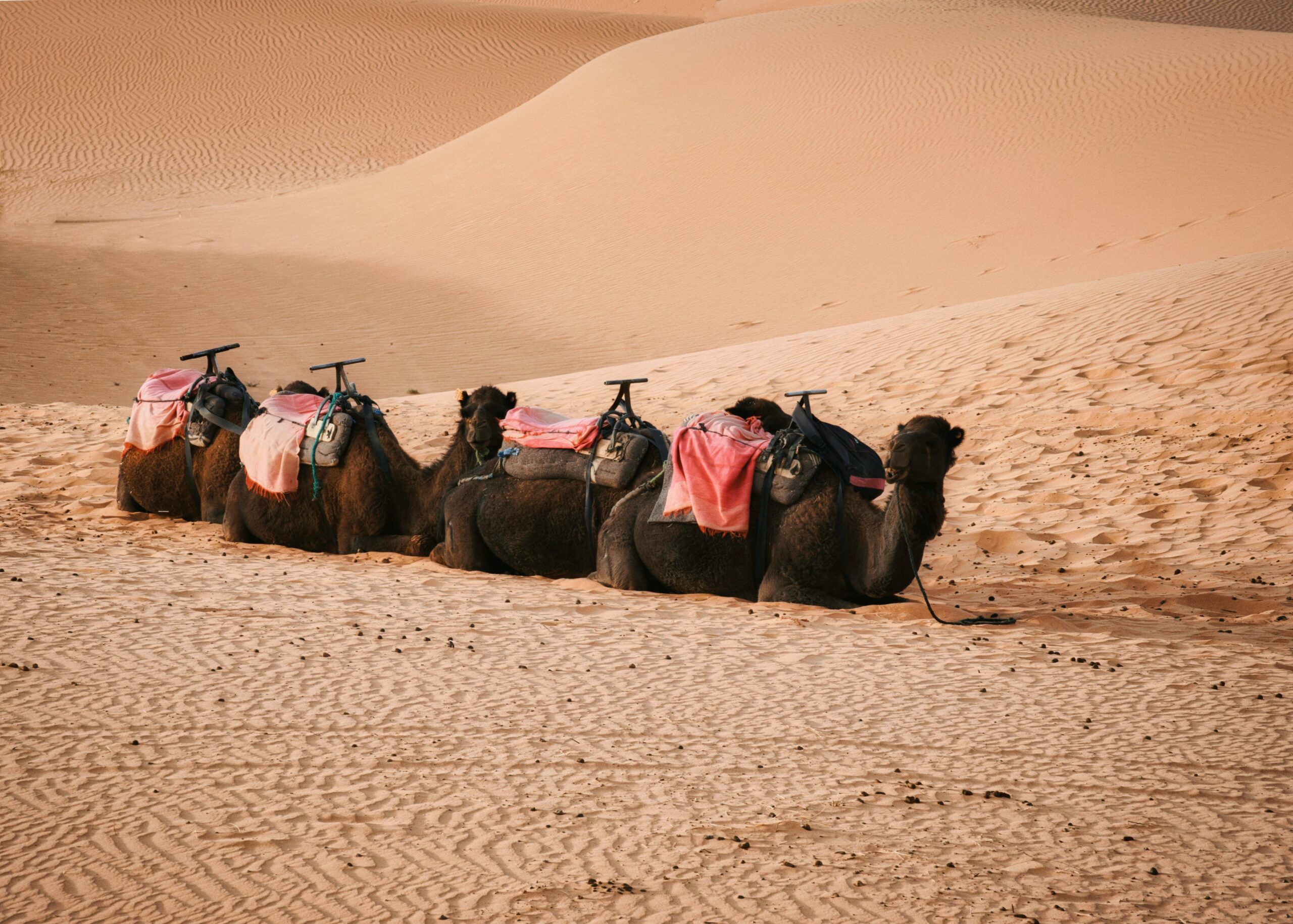
For travelers looking for advice on how to explore the Sahara in Morocco, camel trekking in Merzouga remains one of the most authentic ways to experience the desert landscape.
Desert Culture and Hospitality
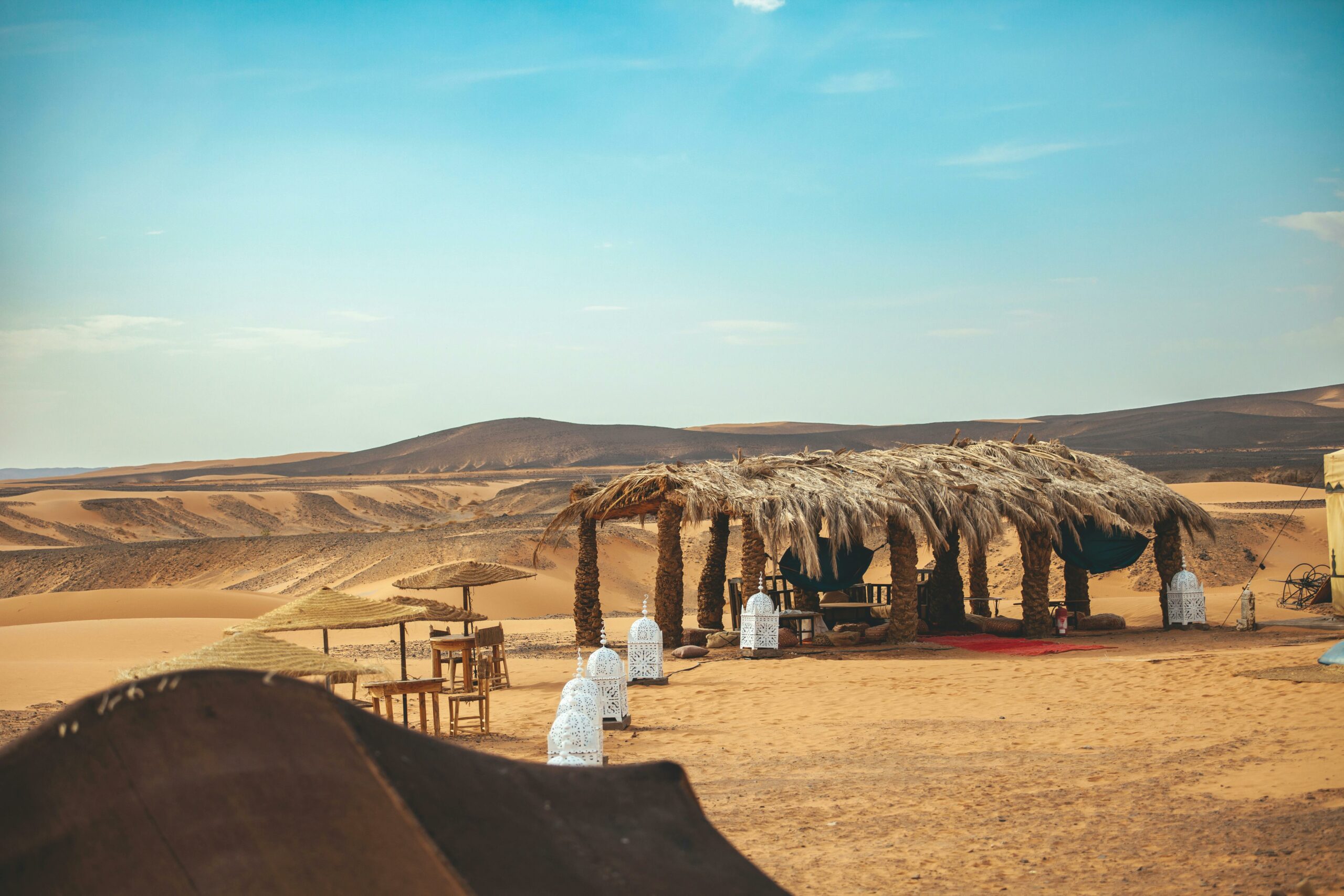
The Sahara is not only a landscape of endless dunes and dramatic sunsets—it is also home to communities that have learned to live and thrive in the desert for centuries. In the region around Merzouga, nomadic traditions have deeply shaped the local culture and way of life. For generations, desert families relied on strong community values and mutual support to survive in such a challenging environment. Because travelers crossing the Sahara Desert often depended on the help of others, hospitality became one of the most important traditions of desert life. Welcoming guests, offering shelter, and sharing food or tea with strangers were not only acts of kindness but also essential practices that helped people survive in the vast desert.
Visitors who explore the dunes of Erg Chebbi today can still experience this tradition of hospitality. One of the most recognizable customs is the Moroccan tea ceremony, where sweet mint tea is served with warmth and generosity as a symbol of friendship and welcome. Evenings in desert camps often include traditional music played on drums, along with storytelling that reflects the history and legends of the Sahara. Sitting around a campfire beneath the star-filled desert sky, travelers have the chance to share in these cultural moments that have connected desert communities for generations.
Ready to Walk the Path of Legends?
The golden dunes of Erg Chebbi are calling—don’t just read about them, live them. Ride a camel, sleep under the Saharan stars, and discover the desert with a local Morocco advisor.
The legends of the lost caravans remind us that the Merzouga desert is far more than a beautiful landscape in Morocco. It is a place where history, mystery, and human ambition meet beneath the vast sky of the Sahara. For centuries, merchants and travelers crossed these sands in search of opportunity, leaving behind stories that still echo through the dunes today.
For modern visitors exploring Morocco, Merzouga offers a rare opportunity to step into this timeless world. Riding across the dunes of Erg Chebbi or spending a night in a desert camp allows travelers to experience the same silence and beauty that once guided ancient caravans across the Sahara.
Many travel advisers and local guides recommend taking time to fully experience the desert—watching the sunset over the dunes, listening to stories shared around a campfire, and following the simple advice of those who know the Sahara best. In doing so, visitors discover that the desert is not only a place of sand and wind, but also a living story that continues to inspire everyone who walks across its golden horizon.
What is the Merzouga Desert famous for?
The Merzouga Desert is famous for its spectacular golden sand dunes known as Erg Chebbi. These dunes can reach heights of around 150 meters and are among the most impressive desert landscapes in Morocco. Visitors travel to Merzouga to experience camel trekking, breathtaking sunsets, and overnight stays in Sahara desert camps. The area is also known for its connection to ancient trans-Saharan caravan routes that once carried gold, salt, and other valuable goods across the desert between North Africa and West Africa.
Were there really lost caravans in the Sahara Desert?
Many historical records and local legends speak of caravans that disappeared while crossing the Sahara Desert. Sandstorms, extreme heat, navigation mistakes, and water shortages made desert journeys extremely dangerous in ancient times. While some stories are likely exaggerated over time, historians agree that many caravans were lost during difficult crossings. These stories became part of local folklore in desert communities, especially around Merzouga, where guides still share tales of vanished traders and hidden treasures beneath the dunes.
What were camel caravans used for in ancient times?
Camel caravans played a vital role in the trans-Saharan trade network that connected North Africa with West African kingdoms. Large groups of camels transported valuable goods such as gold, salt, spices, ivory, and textiles across vast desert distances. These caravans sometimes included hundreds or even thousands of camels traveling together. Skilled desert guides helped merchants navigate the Sahara using stars, landmarks, and generations of knowledge about the desert environment.
Is camel trekking in Merzouga similar to ancient caravan travel?
Camel trekking in Merzouga offers a small glimpse into the experience of ancient traders who once crossed the desert. While modern trips are shorter and more comfortable, travelers still ride camels across the dunes of Erg Chebbi and witness the vastness of the Sahara landscape. Many local guides explain how ancient caravans navigated the desert and survived its harsh conditions. This makes camel trekking not only an adventure activity but also a cultural and historical experience.
What can travelers experience during a night in the Sahara Desert?
Spending a night in the Sahara near Merzouga is one of the most memorable experiences in Morocco. Visitors usually travel by camel to a desert camp in the dunes, where they can watch the sunset, enjoy traditional Moroccan meals, and listen to music around a campfire. As night falls, the desert sky fills with thousands of visible stars due to the lack of light pollution. Local guides often share stories and legends about the Sahara, including tales of ancient caravans and desert explorers.
When is the best time to visit the Merzouga Desert?
The best time to visit the Merzouga region is during the cooler months from October to April. During this period, daytime temperatures are comfortable for camel trekking and desert exploration. Summer months can be extremely hot, with temperatures in the Sahara Desert sometimes exceeding 45°C (113°F). Visiting in spring or autumn allows travelers to enjoy the dunes of Erg Chebbi while avoiding the most intense heat.